Collecting Casino Chips, Part Three: Beyond the Strip
Why most casino chips are worth face value, why small-town Nevada and 1960s Lake Tahoe chips are worth far more, and how to spot fakes.
 By James Hogg12 min read
In Part One you built your chip frame. In Part Two you fell down the rabbit hole of fight nights and Captain Kirk. Now it’s time to leave the Strip and find out why some chips are worth their face value, and others are worth a small fortune.
I’m James Hogg, editor of Vegas Retold and the creator of its walking tours, a former butler manager at the MGM Grand Skylofts and Caesars Palace, and a casino chip collector for more than 23 years. As always, I’m no expert, just a collector who loves Las Vegas, and who has made more than a few mistakes so that you don’t have to.
Casinos everywhere
Not everyone comes to Las Vegas. That might sound strange coming from me, but it’s true. Today there are casinos all over America: on riverboats and in tribal resorts, in Atlantic City and the Gulf Coast, in big cities and in small towns off the interstate. Millions of people have a casino an hour’s drive from home, and every one of those casinos makes chips.
So there’s a very good chance you have a few of them. A $5 chip from the casino near your sister’s house. A $1 from the riverboat you visited on a road trip. A handful from the resort where you celebrated an anniversary.
And I love that. Those are memory chips, and they belong in a frame just as much as your Bellagio chip does. But I have to be honest with you, because this is where a lot of new collectors get a nasty surprise. Those chips almost never go up in value.
Why, I hear you cry? Let’s take a little pause and talk about the economics of chips.
The economics of a chip
A chip is only worth more than its face value if another collector wants it more than you do. That’s it. That’s the whole secret. And in my experience, what collectors want comes down to three things.
1. It’s limited
The first is scarcity. If a casino made a million of a chip, there will always be plenty to go around, and nobody needs to pay more than face value for one. If it made a few thousand, and most of those went home in pockets, frames and drawers, then the ones that come up for sale are few and far between.
2. Everyone knows the casino
The second is the name. Collectors all over the world know the MGM Grand, Caesars Palace, the Sands, the Stardust and the Flamingo. A chip with one of those names on it has a ready-made audience of thousands of people who would love to own it.
3. It has a story
The third is the story. A chip that marks a moment, a famous fight, a legendary show, a casino’s last night, gives a collector something to talk about. And collectors love nothing more than a chip with a story.
Putting it together
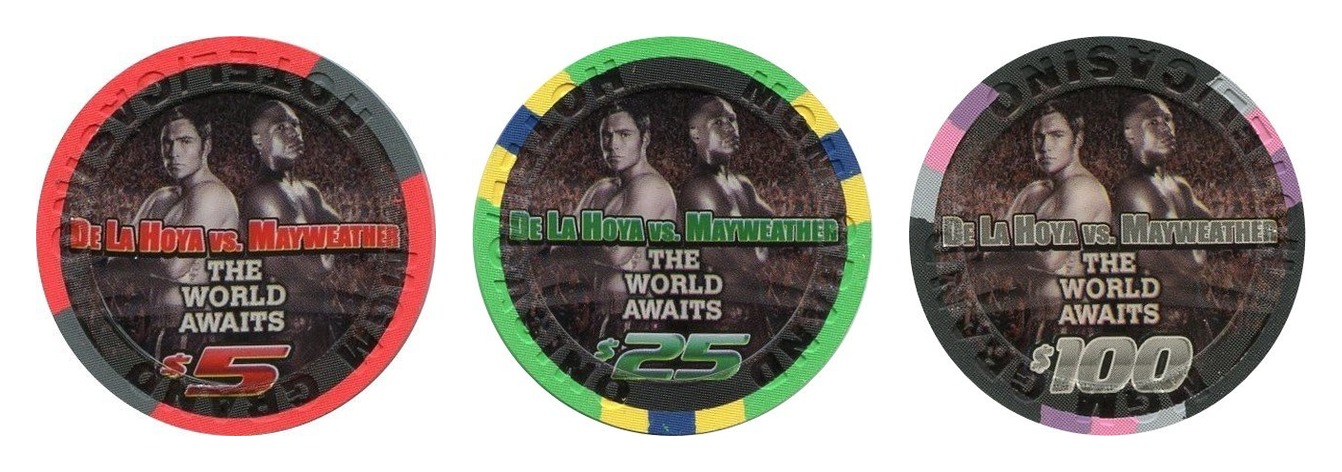
Now put all three together. On May 5, 2007, Oscar De La Hoya fought Floyd Mayweather Jr. at the MGM Grand Garden Arena, one of the biggest fights of its era. For that fight, the MGM made a $5 chip, and as I understand it, it made only 2,000 of them. Limited? Yes. A casino everyone knows? Absolutely. A story? One of the great nights in Las Vegas boxing. Today, if you want that chip, you’ll pay well over its face value.
And the MGM didn’t stop at $5. It also made a green $25 and a black $100 for the fight. Remember the maths from Part Two: very few people were willing to keep $25, let alone $100, sitting in a drawer as a souvenir. Most of those chips went straight back to the cage, which makes the survivors even harder to find. Put the $5, the $25 and the $100 side by side and you have one of the great fight-night sets, and a collector’s dream.
Now take a chip from a casino in a state you’ve never visited, with a name you’ve never heard of. It might be beautiful. It might mean the world to you. But ask yourself the hard question: what are the chances another collector wants it? For most of these chips, the honest answer is not many. So its value is the value printed on the chip.
That’s not a bad thing. It just means you collect those chips for love, not money. And that, in the end, is the best reason to collect anything.
Sources: Oscar De La Hoya vs. Floyd Mayweather Jr., Wikipedia
Exceptions to the rule
Of course, every rule has its exceptions, and chip collecting has some wonderful ones. Here are my favourites.
Exception one: small-town Nevada
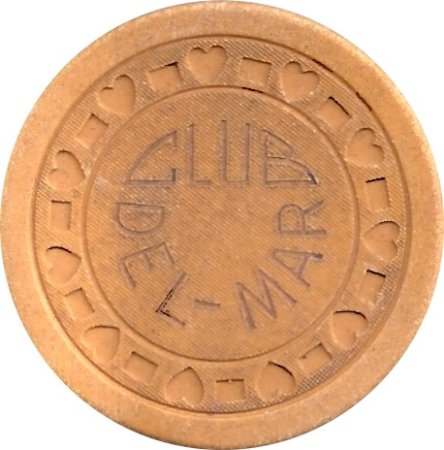
Here’s the first twist. Las Vegas wasn’t the only place in Nevada with casinos. Far from it. In the 1950s and 1960s, many of Nevada’s small towns had their own little local casinos: a club on the main street, a bar with a couple of tables at the back, a hotel where the miners, ranchers and truckers came to play on a Saturday night. Towns like Ely, Elko, Tonopah, Winnemucca and Hawthorne all had their clubs, and every one of those clubs needed chips.
But these were small places, so they ordered small numbers. A few hundred chips, perhaps a few thousand. Then the club closed, or changed hands, and the chips were cashed in, destroyed or simply lost. Very few survive.
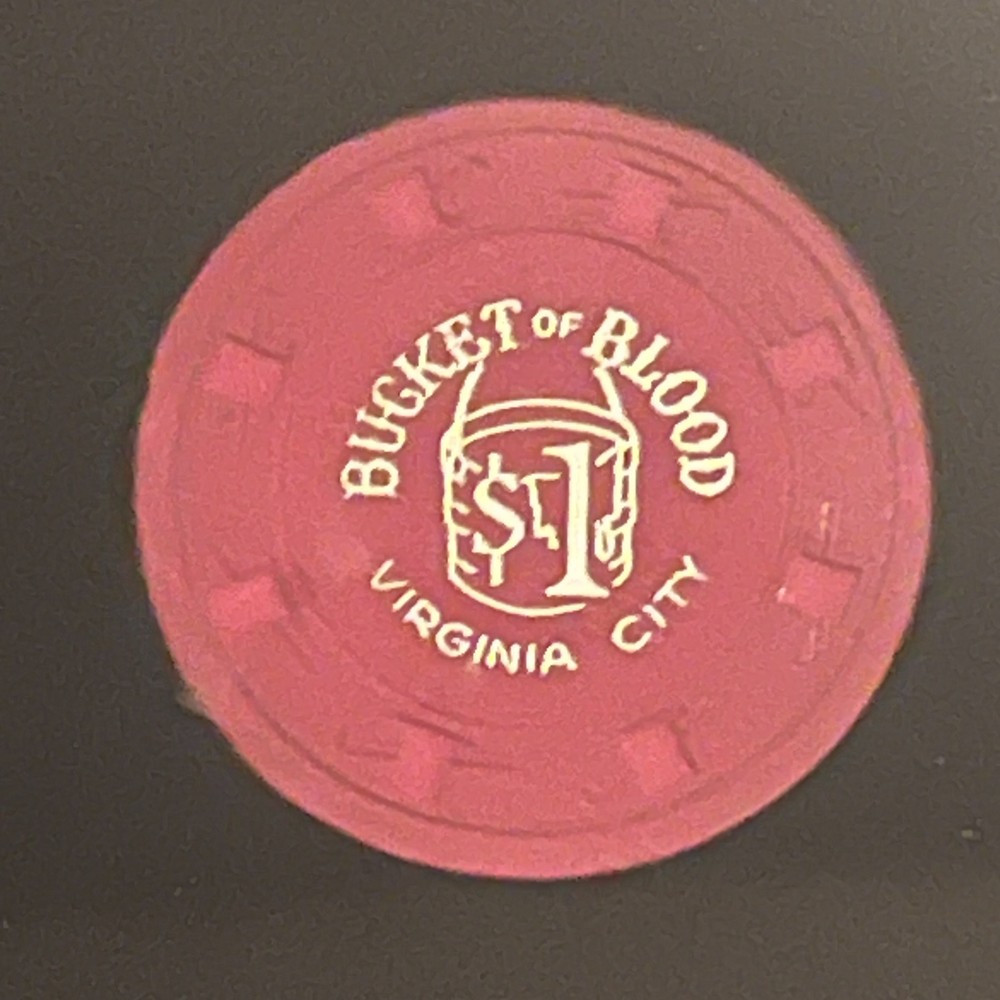
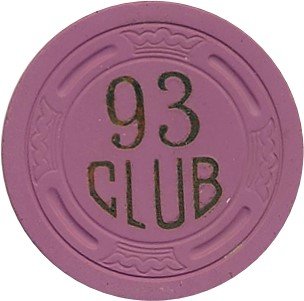
Two more towns for the list: Virginia City and Caliente. Below is a $1 chip from the Bucket of Blood in Virginia City, and a 1949 chip from the 93 Club in Caliente, a club the Museum of Gaming History’s ChipGuide lists as open only from 1948 to 1957.
Collectors are an odd bunch
And here’s the thing about chip collectors: we’re an odd bunch. There’s nothing we love more than a complete set. Some collectors have made it their life’s mission to own one chip from every town in Nevada that ever had a casino. One from Las Vegas is easy. One from Reno is easy. But one from a tiny club in a town of a few hundred people, from 1958? That’s the chip that completes the set, and a collector chasing that set will pay real money for it.
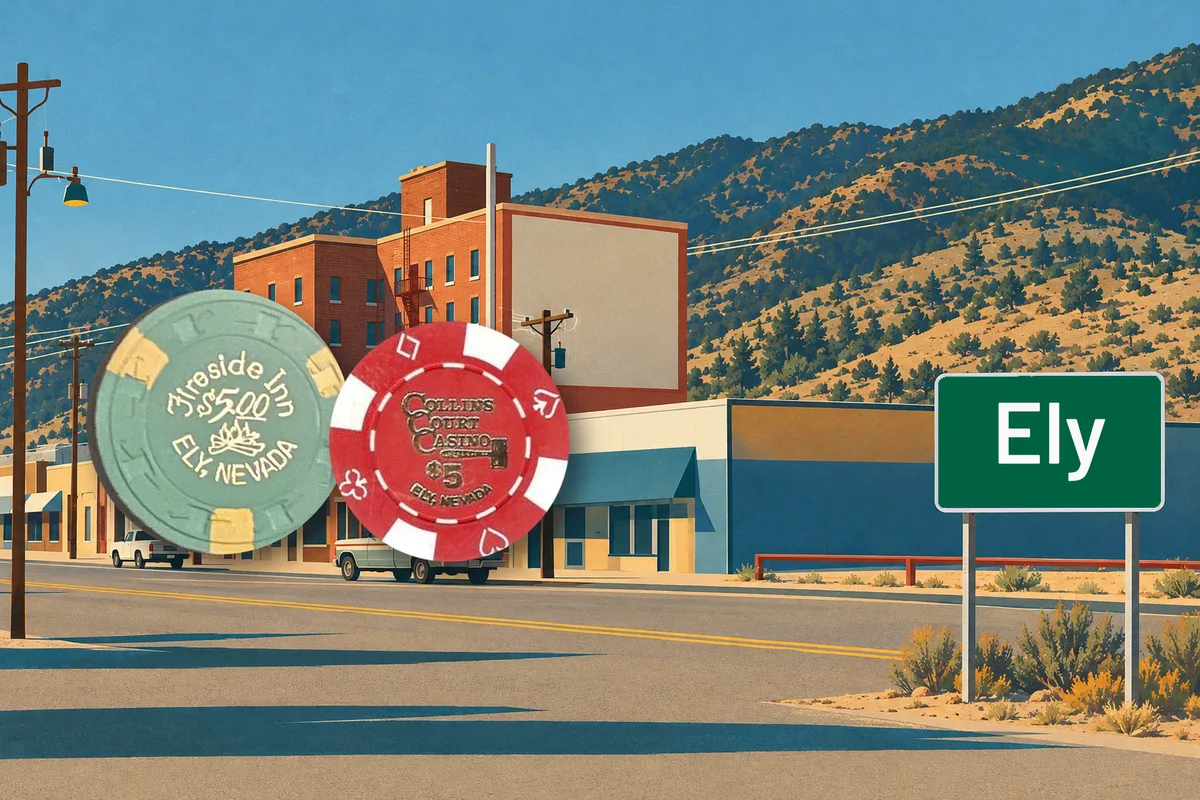
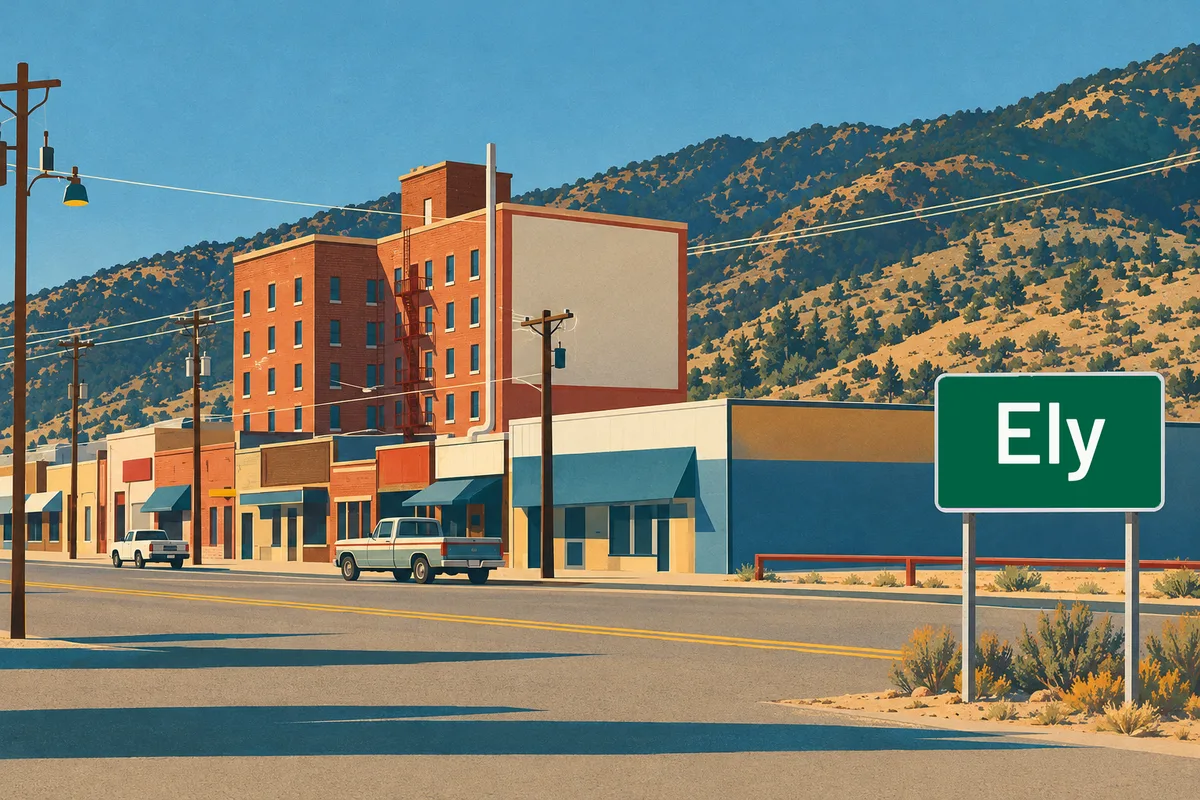
Take Ely. It sits out in the high desert of eastern Nevada, on US Highway 50, the road Life magazine once called “the loneliest road in America.” It’s a small town, and yet over the years it has had more than 35 casinos and clubs with chips you can collect. Not many people pass through, and not many of those old chips have survived.
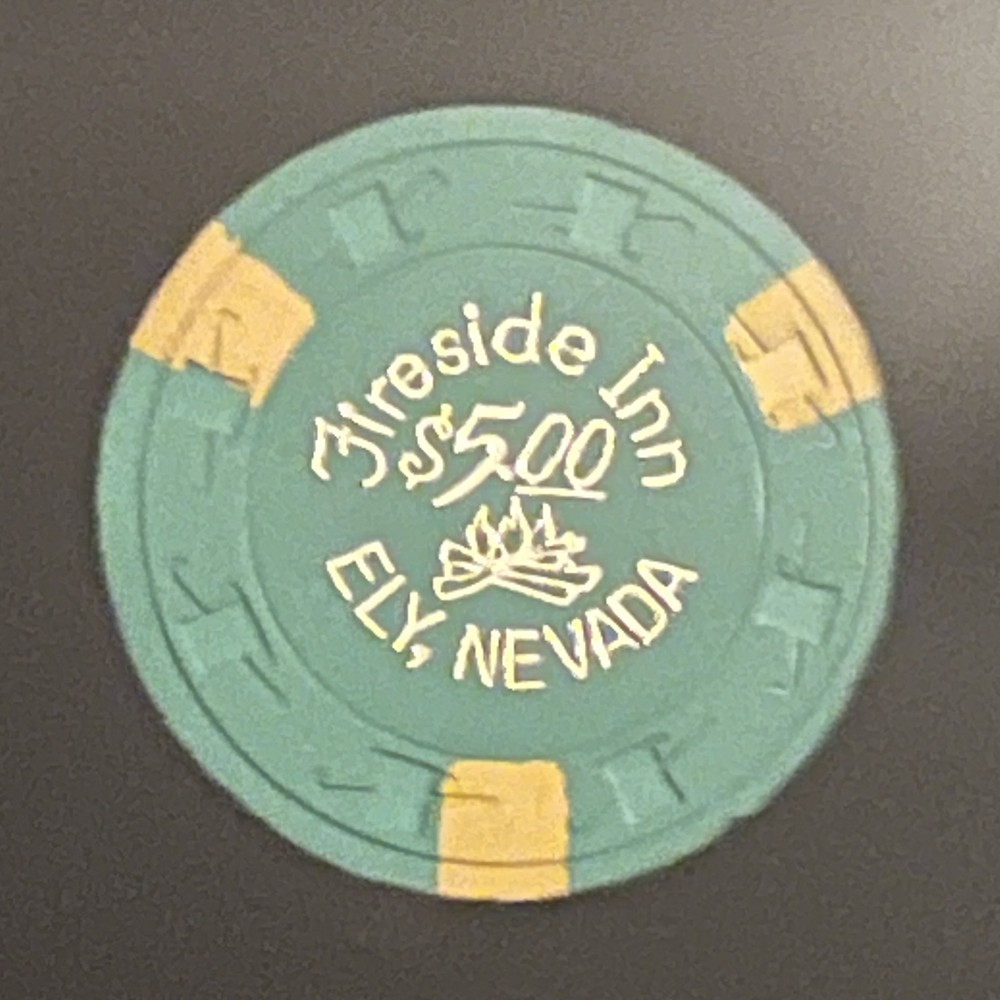
One of the odd, rare ones is the Collins Court Casino, at 612 Aultman Street. It opened in 1992 and closed in 1993, so it barely lasted a year. It made just a $5 and a $25 chip, and for $1 bets it simply used its $1 slot tokens. And like many small-town clubs, it had limited weekend gaming, which meant the tables were only open on Friday, Saturday and Sunday. One year, weekends only, two chips: no wonder that chip is so hard to get.
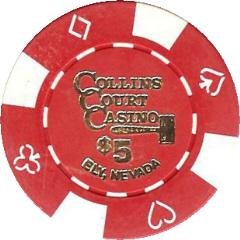
As a sidebar: yes, I got the Collins Court $5. No, I’m not telling you what I paid for it, because my wife reads these blogs too. But I can tell you that the day I bought it, I was very, very happy.
And here’s what I love about chips like this. You can get the chip, then take a road trip to Ely and see what’s left of the place. Stand on the street where it was, and picture those weekend nights at the tables. Suddenly a little chip has become an adventure.
For me, that’s the best part of collecting small-town Nevada. It gives me the perfect excuse to travel around the Great State of Nevada. Well, it’s great to me!
So that odd little $1 chip you found in Grandpa’s coffee tin, from a town you’ve never heard of? Don’t spend it. Look it up. It could be worth a lot more than a dollar.
Exception two: Reno and Lake Tahoe
Two bigger places break the rule a little too.
Reno
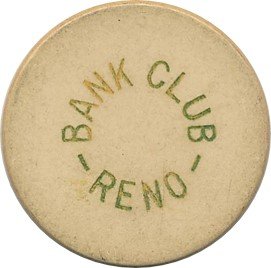
The first is Reno, “The Biggest Little City in the World.” Long before the Strip was the Strip, Reno was Nevada’s gambling town, and it was where everyone’s parents and grandparents went. They went for the casinos, for the shows and, famously, for a quick divorce. Generations of American families have a Reno story, and a Reno chip, tucked away somewhere.
That means Reno chips have a huge, nostalgic audience. Not every Reno chip is valuable, far from it, but the older ones from the classic clubs have plenty of collectors chasing them.
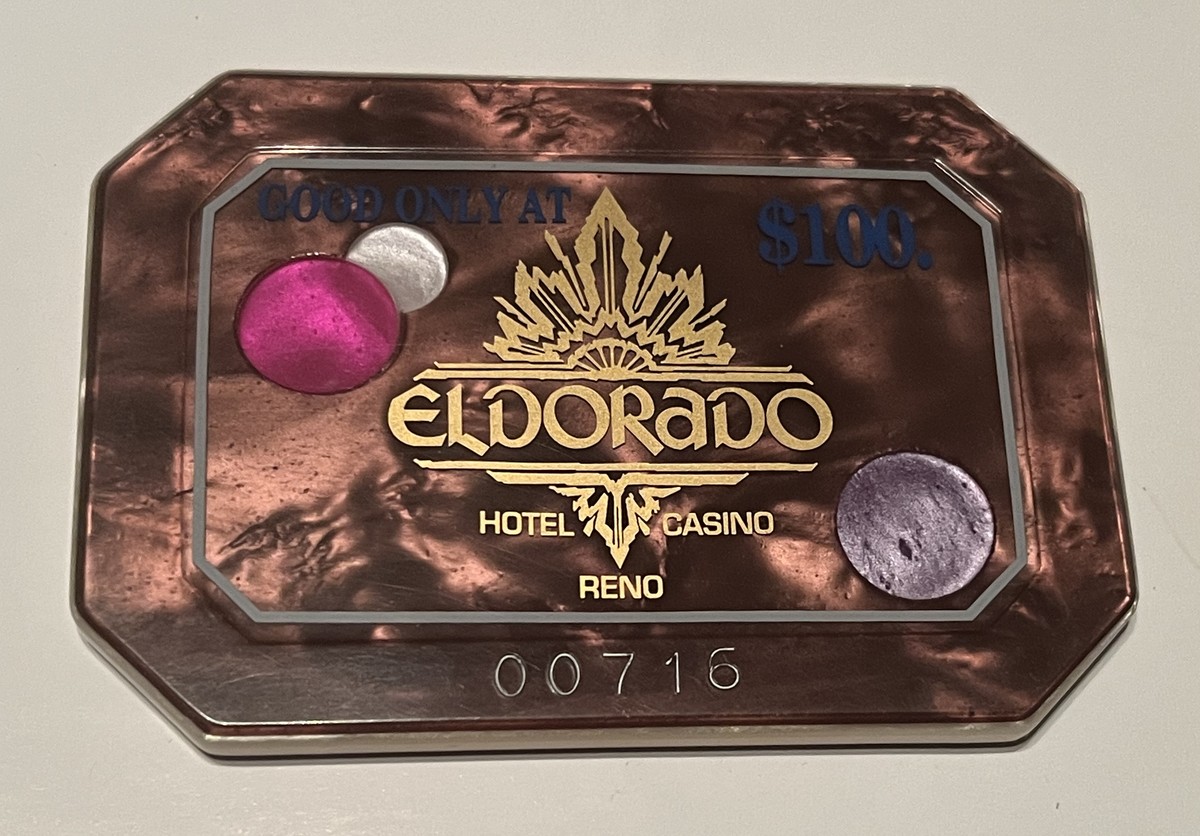
Reno casinos made plaques too, and I have a cool one: a $100 plaque from the Eldorado, made in the 1990s. I paid $150 for it, and today it’s worth more than $300. But I didn’t buy it thinking it would go up. I bought it because I just like plaques, and like Pokémon, I have to have them all. That’s the funny thing about collecting for love: sometimes the money follows anyway. We’ll come back to plaques later in this series.
Lake Tahoe: home of the Rat Pack
The second is Lake Tahoe, and for me this is where chip collecting gets truly magical.
Lake Tahoe was the Rat Pack’s playground. They toured there, they holidayed there and, in Frank Sinatra’s case, they owned there. Frank bought the Cal Neva Lodge on the north shore in 1960. The lodge famously sat right on the state line, and the Rat Pack played its Celebrity Room. Marilyn Monroe visited too, in the summer of 1962, just days before her death.
Now think about what that means for a chip. Tahoe casinos were small compared to the big Strip resorts, so their chips were made in small quantities. That 1960s chip in your hand was actually there. It may, just may, have been held or played by Frank, or Dean, or Sammy, or even Marilyn herself. You can’t prove it, of course. But you can’t prove they didn’t, either.
That’s why a good-quality 1960s Lake Tahoe chip can go for a good price. And it’s why I personally love them. They’re a link to the Rat Pack: to the tours, the holidays and the casino Frank owned.
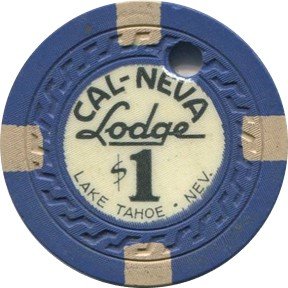
See? Chip collecting just got you closer to Frank Sinatra. I told you it was a cool hobby.
Sources: How Frank Sinatra lost his Nevada gaming license, KUNR; Cal Neva Lodge & Casino, Wikipedia
Time to buy a book
If you’ve got this far, and you’re starting to look at small-town Nevada chips and 1960s Tahoe chips, you’ve stopped being a casual collector. Of course, you’re back on eBay for these, but now there’s one more thing you should buy before you buy another chip: a chip guide.
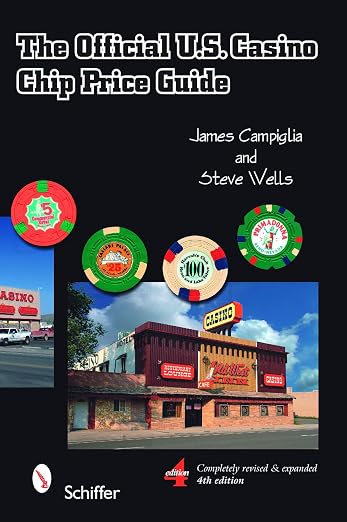
Yes, they exist. And in my opinion, James Campiglia and Steve Wells made the best one: The Official U.S. Casino Chip Price Guide, now in its fourth edition. It’s packed with pictures and great descriptions, so you can see exactly what a chip should look like, which casino and era it came from, and roughly what collectors pay for it. Prices change, of course, so treat any guide as a starting point, not a valuation. But when you’re standing at a dealer’s table, or staring at an eBay listing at midnight, it’s the best friend you’ll have.
Sources: The Official U.S. Casino Chip Price Guide, James Campiglia and Steve Wells, Schiffer Publishing
Beware of fakes
And here’s why a book is necessary, not just nice to have. Once a chip is worth money, someone, somewhere, will start to fake it.
For most chips, faking isn’t worth the trouble. Nobody is going to counterfeit a $1 chip from a riverboat casino that sells for a dollar. But a rare small-town Nevada chip, a 1960s Tahoe chip or a famous chip from a closed Strip casino can sell for hundreds or even thousands of dollars, and that’s when the fakes appear.
That’s where the guide earns its place on your shelf. Before you buy a valuable chip, compare it carefully with the pictures in the book:
The mould: the pattern pressed around the edge of the chip. Each maker and era had its own, and a wrong mould is a red flag.
The inlay: the printed centre with the casino’s name and denomination. Check the lettering, the colours and the logo against the real thing.
The edge spots: the coloured inserts around the rim. Count them, and check their colours.
The feel: old clay chips have a weight and a softness to them that cheap reproductions rarely match.
If something doesn’t match, walk away. If the price seems too good to be true for a rare chip, it probably is. And for the expensive ones, buy from established dealers and collectors with a reputation to protect.
Where to buy
eBay is still where you’ll find the widest choice. Search by town, such as “Ely Nevada casino chip” or “Lake Tahoe casino chip,” and always check sold listings, not asking prices, to see what chips really sell for. Ask for clear photos of both sides and the edge.
Spinettis Gaming, not far from the Strip, buys and sells casino chips, and you can browse in person or on its online store. It’s a great place to see older Nevada chips up close before you buy.
The Casino Chip and Gaming Token Collectors Club is the place to meet the serious collectors, the ones chasing every town in Nevada, and its annual convention is held in Las Vegas in June. Go and visit, bring your guide, and bring money with you. You will not be disappointed.
Your challenge
So here’s your challenge for Part Three. Go through every chip you own, the Strip chips, the riverboat chips, the ones from your sister’s local casino and that odd one in Grandpa’s coffee tin, and sort them into two piles.
In the first pile go the memory chips: the ones you love, from places you’ve been, that are worth what’s printed on them. Put them in a frame and enjoy them.
In the second pile go the chips that might be something more: small-town Nevada, old Reno, 1960s Lake Tahoe, or anything from a famous casino with a famous story. Get out your guide and look them up.
You might be surprised. And if one of them turns out to be from Frank’s Cal Neva, well, you’ll be holding a little piece of the Rat Pack in the palm of your hand.
Think you know Vegas? We do. Vegas Retold.
Want the stories behind the casinos on those chips? Explore our walking tours at vegasretold.com.
Choose your next stop
Sources and further reading
- Oscar De La Hoya vs. Floyd Mayweather Jr., Wikipedia May 5, 2007, MGM Grand Garden Arena
- How Frank Sinatra lost his Nevada gaming license, KUNR Sinatra bought the Cal Neva in 1960
- Cal Neva Lodge & Casino, Wikipedia State line, Celebrity Room, Marilyn Monroe’s 1962 visit
- The Official U.S. Casino Chip Price Guide, James Campiglia and Steve Wells, Schiffer Publishing Fourth edition