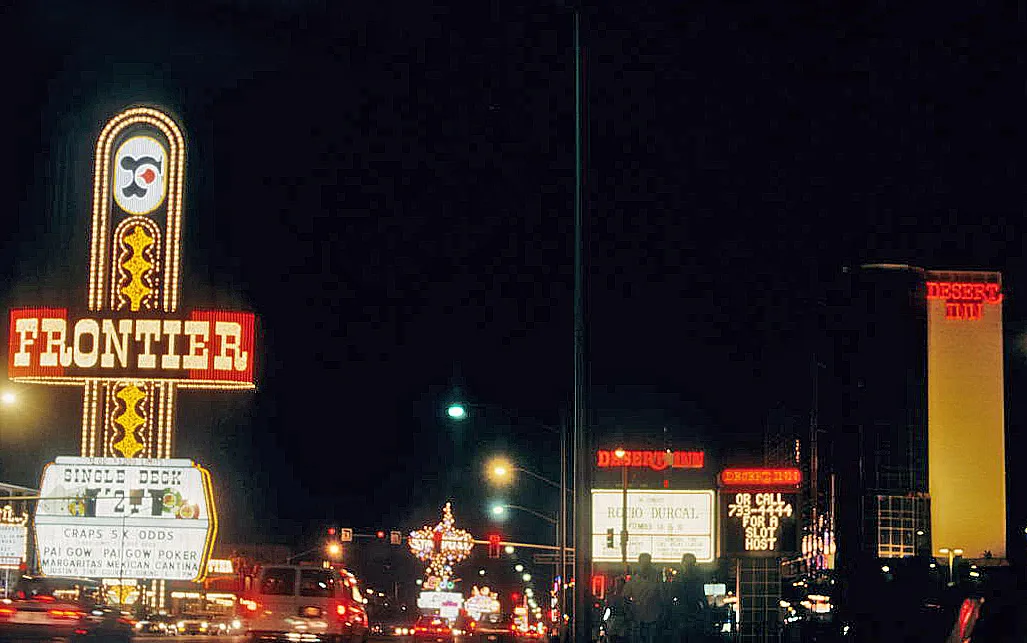

Wynn Las Vegas opened on April 28, 2005, as a new resort on the former Desert Inn resort and country-club grounds. It is a replacement development, rather than the Desert Inn under a new sign. The earlier hotel opened on April 24, 1950, according to UNLV’s archive. The bronze Wynn tower and the lost Desert Inn therefore represent different generations of a larger site, with different buildings and opening dates.
From the Desert Inn to Wynn
Wynn Resorts' 2006 account describes a resort assembled around rooms, a casino, restaurants, shopping, meeting space and an eighteen-hole golf course. Golf is an especially useful thread between the Desert Inn era and the resort that followed, although continuity of a resort activity does not mean the original course or buildings survived unchanged.
Encore joins the resort
The second tower arrived later. Encore broke ground immediately north of Wynn on April 28, 2006, and opened on December 22, 2008. The company's groundbreaking announcement described it as a second full-scale hotel integrated with its neighbour. Wynn and Encore therefore belong to the same developed resort complex, but their opening dates should not be collapsed into one.
The Lake of Dreams and the changing resort
One of Wynn's most revealing features is its Lake of Dreams: a landscaped performance setting framed by a manmade mountain and waterfall. The resort's account of designer Michael Curry's work dates the original lake presentation to 2005 and explains the idea as a succession of short scenes that could catch a couple's attention without taking over their evening. The 2020 reworking added new acts and technology to the same setting.
This helps explain a different kind of Las Vegas spectacle: landscape, dining and performance arranged together, with the lake functioning as a changeable stage.
For a history-minded visitor, the important comparison is between layers of development. The Desert Inn supplies the earlier resort site and golfing tradition; Wynn is the 2005 redevelopment; Encore is the 2008 expansion; and the lake's changing productions show that a resort continues to be revised after its opening. The surviving evidence is spread between the place itself, company opening records and photographs preserved by UNLV. Reading those together prevents a current Wynn photograph from standing in for a lost Desert Inn building, or an Encore view from being dated to Wynn's first day.