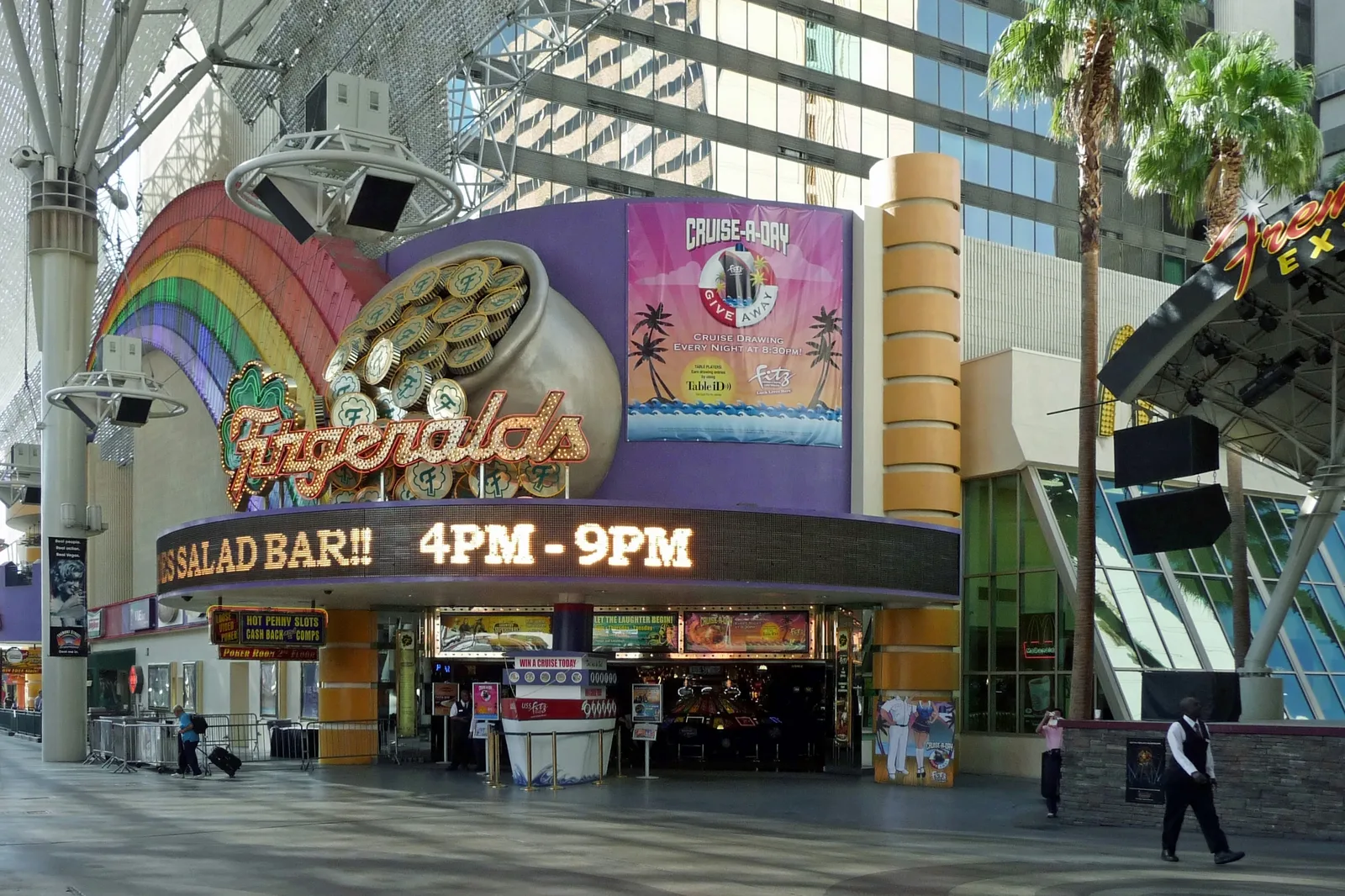

The D’s hotel at 301 Fremont Street began as the Sundance in 1980. It later became Fitzgeralds, then took the D name during a major renovation and rebranding in 2012. The changing signs belong to successive chapters of the same hotel and casino.
The Fitzgeralds name and Irish imagery
UNLV’s history dates the sale to Lincoln Management Group and the Fitzgeralds renaming to 1987. The new identity drew on Irish imagery: shamrocks, rainbows, pots of gold and the Mr. O’Lucky mascot. The 2008 photograph preserves that frontage before the later redesign.
The Barden years
Financial difficulties brought another ownership change around the turn of the century. Nevada’s records place Don Barden and the Majestic Star organization in the ownership structure from December 7, 2001. Fitzgeralds remained part of Barden’s business through the following decade, before his estate sold the property to Derek and Greg Stevens in 2011.
A new D identity
The Stevens brothers’ new D identity debuted in October 2012. Architect Gensler describes a property-wide renovation, including guestrooms, public spaces, bars and restaurants. The casino’s two levels deliberately contrasted a modern Art Deco palette downstairs with a Vintage Vegas theme upstairs. The designer’s account includes the Sigma Derby mechanical horse-racing game as part of that original upper-floor concept.
Detroit on Fremont Street
Detroit became another reference point. Stevens is a Detroit native, and the new identity developed alongside restaurants brought from his hometown: American Coney Island and Andiamo Italian Steakhouse. LONGBAR and the outdoor D Bar connected the rebuilt interiors to Fremont Street’s sports-viewing and pedestrian nightlife.
A Belgian connection
A bronze Manneken Pis replica at the main entrance adds a different family connection. The operator says Derek Stevens installed the Belgian figure in honor of his heritage. The replica’s own history should be distinguished from the centuries-old original in Brussels.
One hotel, successive names
The D remains an operating hotel and casino at its established Downtown address. Its Sundance, Fitzgeralds and D phases represent changes of ownership, name and design. They should not be confused with Sundance West, a separate former casino farther along Fremont Street, or with the Stevens brothers’ other properties.
