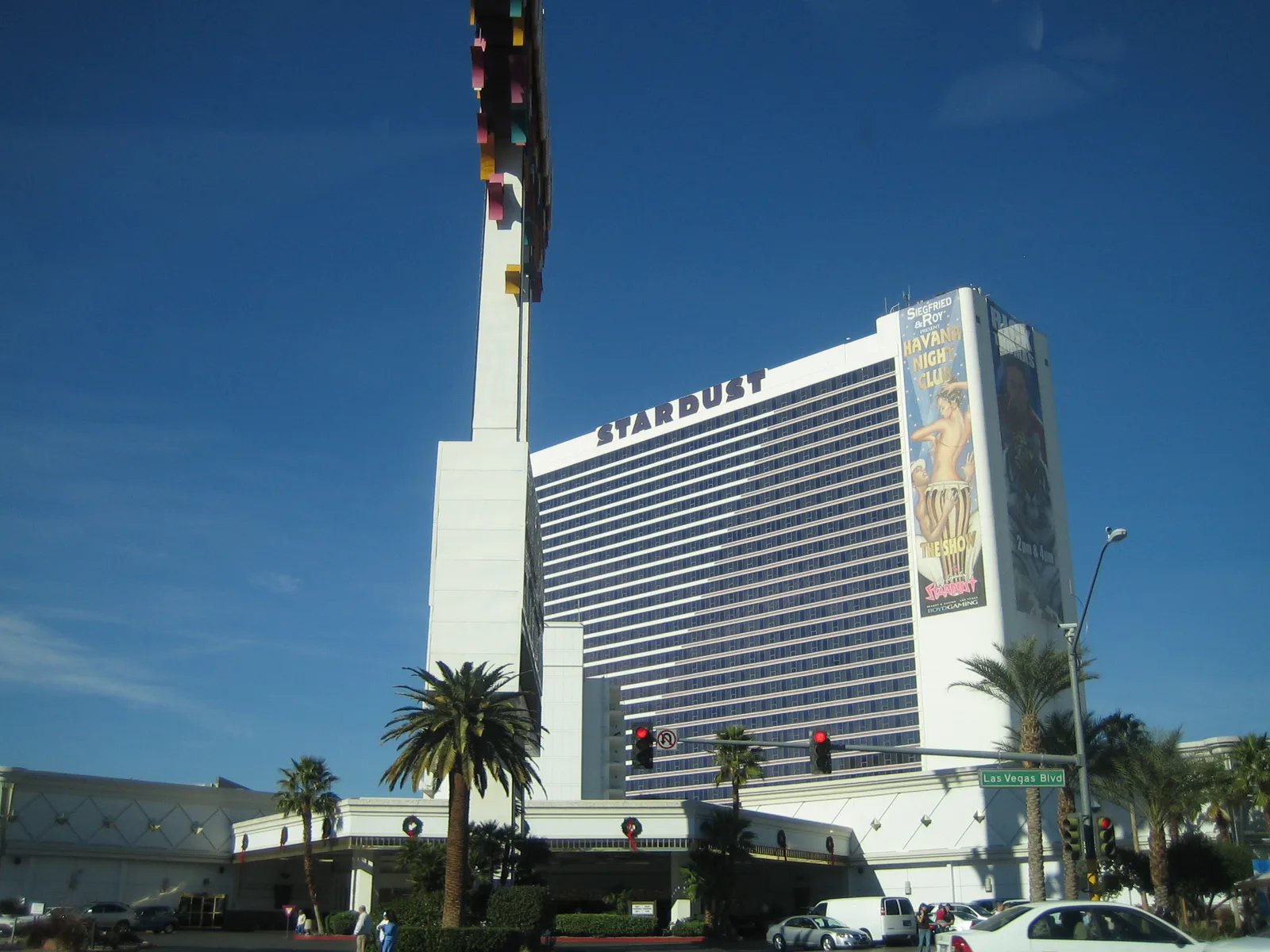


Stardust operated on the northern Las Vegas Strip from 1958 until November 1, 2006. Tony Cornero conceived the resort but died in 1955 before it was completed. The finished hotel and casino paired a space-age identity with a large entertainment business: its name described both a place to stay and a visual promise made to motorists on the Strip.
Two generations of Stardust signs
That image changed during the resort's lifetime. The Neon Museum distinguishes Kermit Wayne's original 1958 frontage signage from Paul Miller's freestanding roadside pylon, added in 1968. A later photograph of the tall sign is therefore not a view of the resort exactly as it opened. The jagged atomic lettering also gave way to a different typeface in the early 1990s. Those changes help explain why two authentic photographs can show a recognisable Stardust while recording different eras.
Closure, demolition and redevelopment
After the closure, the buildings were imploded on March 13, 2007. Boyd had planned the Echelon redevelopment; Genting later acquired the site, which became Resorts World Las Vegas. The current resort is a successor development on the wider site, not a surviving Stardust hotel operating under another name.
Lido de Paris and the stage
The stage mattered as much as the sign. UNLV's Stardust records describe the Café Continental's hydraulic lifts and the arrival of Donn Arden's Lido de Paris production from France in 1958. Later owners kept entertainment at the centre of the resort: the Boyd family purchased Stardust in 1985, and Enter the Night replaced Lido de Paris in 1992. The archive preserves programmes, photographs and recordings across those changing productions, so the show-business history can be followed beyond a single famous image.
Ownership and the casino stories
A separate strand concerns the casino's ownership and organised-crime history. UNLV records the 1974 sale to Allen Glick's Argent Corporation, Frank Rosenthal's unofficial influence and the subsequent skimming scandal. Those episodes belong to specific periods and people; they do not explain every employee or every year of the resort's life. The related Story about cashier William Brennan's 1992 disappearance supplies another distinct episode, after the Boyd purchase.
Where the evidence survives
For today's visitor, Stardust's history is divided between a transformed site and surviving objects and records elsewhere. The Neon Museum holds lettering from different sign eras, while UNLV preserves the resort archive. Resorts World opened in June 2021. Reading a former-site view together with those collections makes the distinction clear: a resort can disappear from its parcel while its signs, records and stories remain evidence of how it once worked.