
Northern Club began as Mayme Stocker’s card room at 15 East Fremont Street in 1920. The Stocker family had settled in Las Vegas in 1911 after following railroad work west. Their business connected the early railroad town to the licensed gambling industry that emerged in the following decade.
A railroad family’s business
Mayme’s position as owner was shaped by the railway’s rules. Railroad employees could not own saloons or gambling clubs, so her husband Oscar’s name could not appear on the licence. Their son Harold became the club’s chief operator after losing railroad work. Northern Club was a family enterprise, with Mayme holding a role that her husband’s employment prevented him from taking.
Mayme Stocker and the 1931 licence
In 1931, after Nevada legalized commercial gambling, Stocker and partner Joe H. Morgan secured a gaming licence for Northern Club. Clark County recognizes Stocker as the first woman to receive a casino gaming licence that year. The surviving 1931 licence is among the Stocker Family Papers preserved at UNLV.
Closure and a continuing hotel
Northern Club’s later history has gaps. UNLV’s archival guide says the Depression forced the family’s club to close, while they continued operating the hotel and leased the ground floor. It does not supply a closing year. The end of that family operation, later uses of the premises and the survival of the hotel should not be treated as the same event.
Later casinos at the address
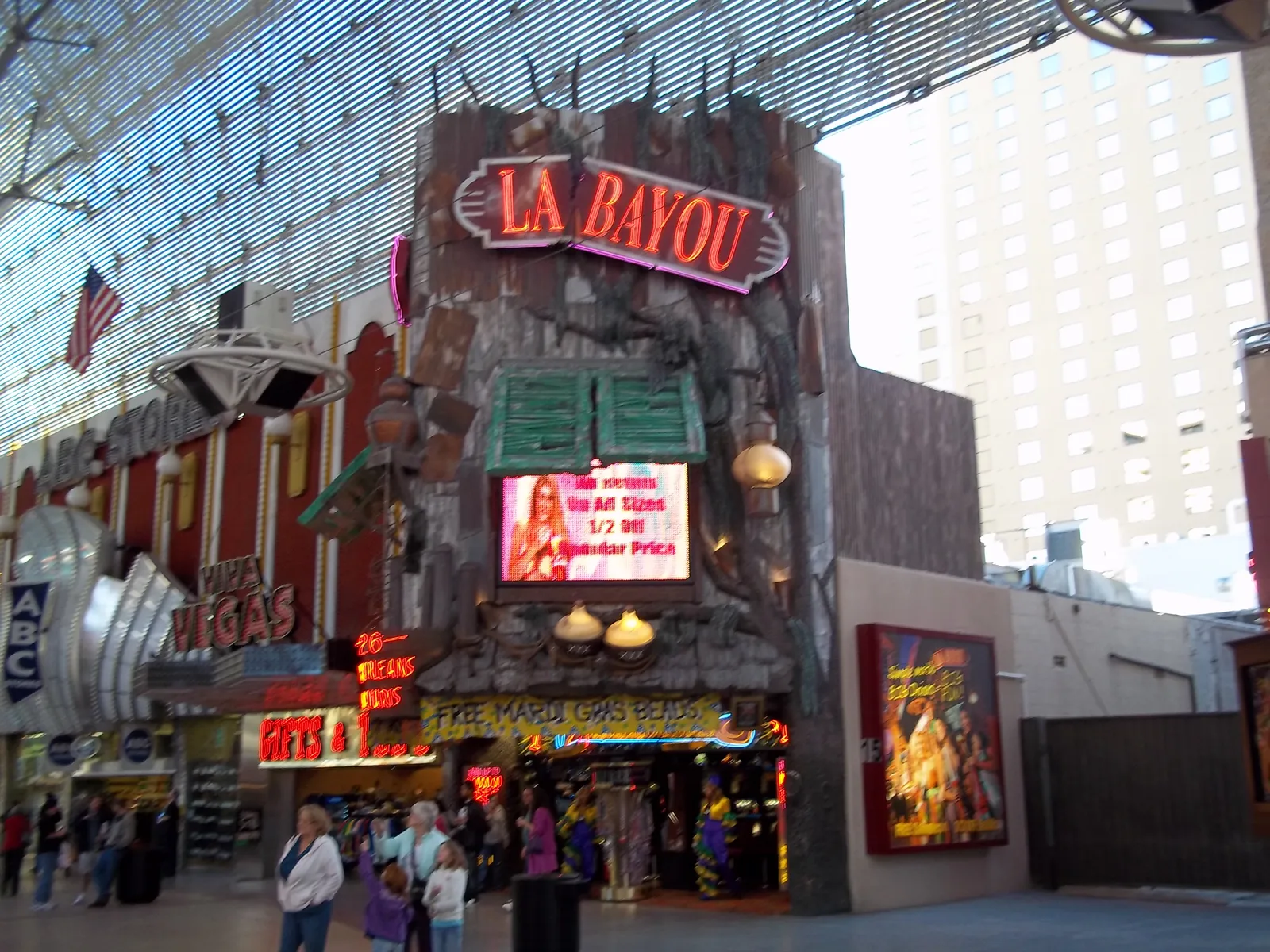
Monte Carlo Club opened at 15 Fremont in 1945. The much later Coin Castle, followed by La Bayou, brought different names and businesses to the address. La Bayou closed in 2016, and Golden Gate incorporated its land into a casino expansion completed in 2017.
What the site can tell us
This sequence explains why Northern Club matters beyond a licensing milestone: it reveals how a small family business became one chapter in a repeatedly reused Downtown site. Northern Club is a historic property; neither its exact closing date nor a surveyed original footprint is established here. The later La Bayou photograph shows the address in 2011, not Northern Club’s building or appearance in the 1920s.