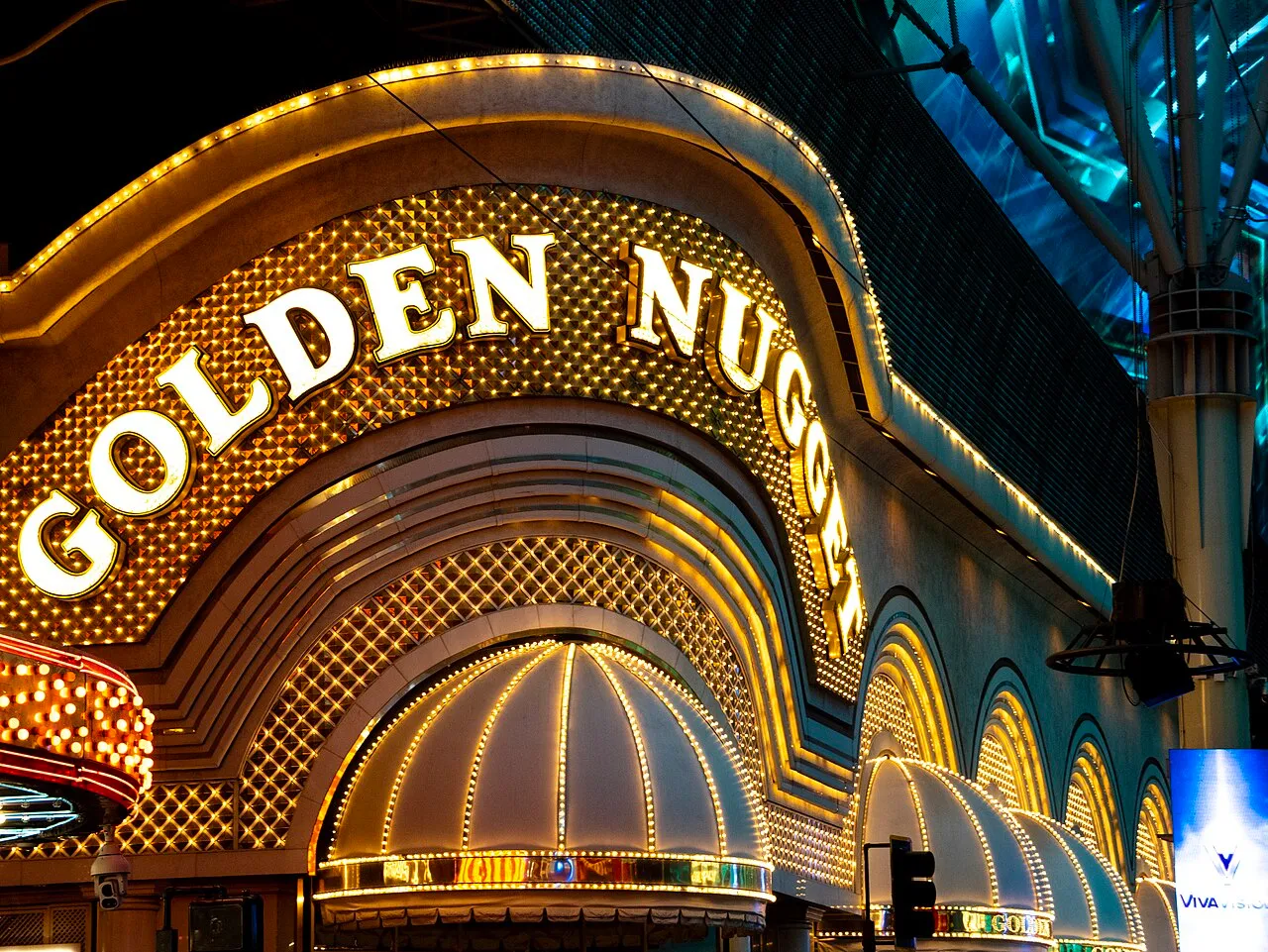

Golden Nugget’s history begins with a downtown gambling hall, before the hotel towers and resort facilities that now surround it. The company’s 2005 annual filing dates that opening to 1946. Its Fremont Street address connects the surviving casino name to a property that has repeatedly expanded and changed ownership.
From gambling hall to hotel
Steve Wynn’s arrival marked a major change in scale. UNLV records his appointment as chairman and president in 1973. A contemporary 1984 Nevada Magazine profile describes a casino without hotel rooms when he began buying shares, followed by construction of a hotel tower in 1977. Accommodation became part of a business that had started with gambling.
A change of ownership
The resort later passed through further corporate changes. Landry’s completed its acquisition of Golden Nugget, Inc. on September 27, 2005. The company’s subsequent filing describes rooms renovated in 2003 and 2004 and new plans for restaurants, the pool and other facilities. Those records describe successive projects, rather than one opening that created the whole present complex.
Rush Tower and a larger resort
Rush Tower added another distinct phase in 2009. Its architect, Kirksey, reported the completed hotel-casino expansion in December that year, describing a new tower, expanded gaming space, Chart House restaurant and a separate arrival point at First and Carson streets. The project extended the resort’s identity beyond its familiar Fremont Street frontage.
The present complex
Today the operator distinguishes Gold, Carson, Spa and Rush towers within one Las Vegas resort. The Tank pool complex is another recognizable part of that later development. Its aquarium and pool setting should not be read as a promise that every feature is operating: the operator’s page inspected in October 2026 carried a maintenance notice, including a closed slide.
A name that survived its expansions
Golden Nugget remains listed as a downtown casino in Nevada’s June 30, 2026 gaming report. Its opening chronology still has a documented discrepancy: a UNLV collection note says August 1945, while the company filing and brand’s retrospective say 1946. This account follows the company’s year and preserves that difference rather than inventing an exact opening day.